Precision Molded Plastic Parts for Household Items
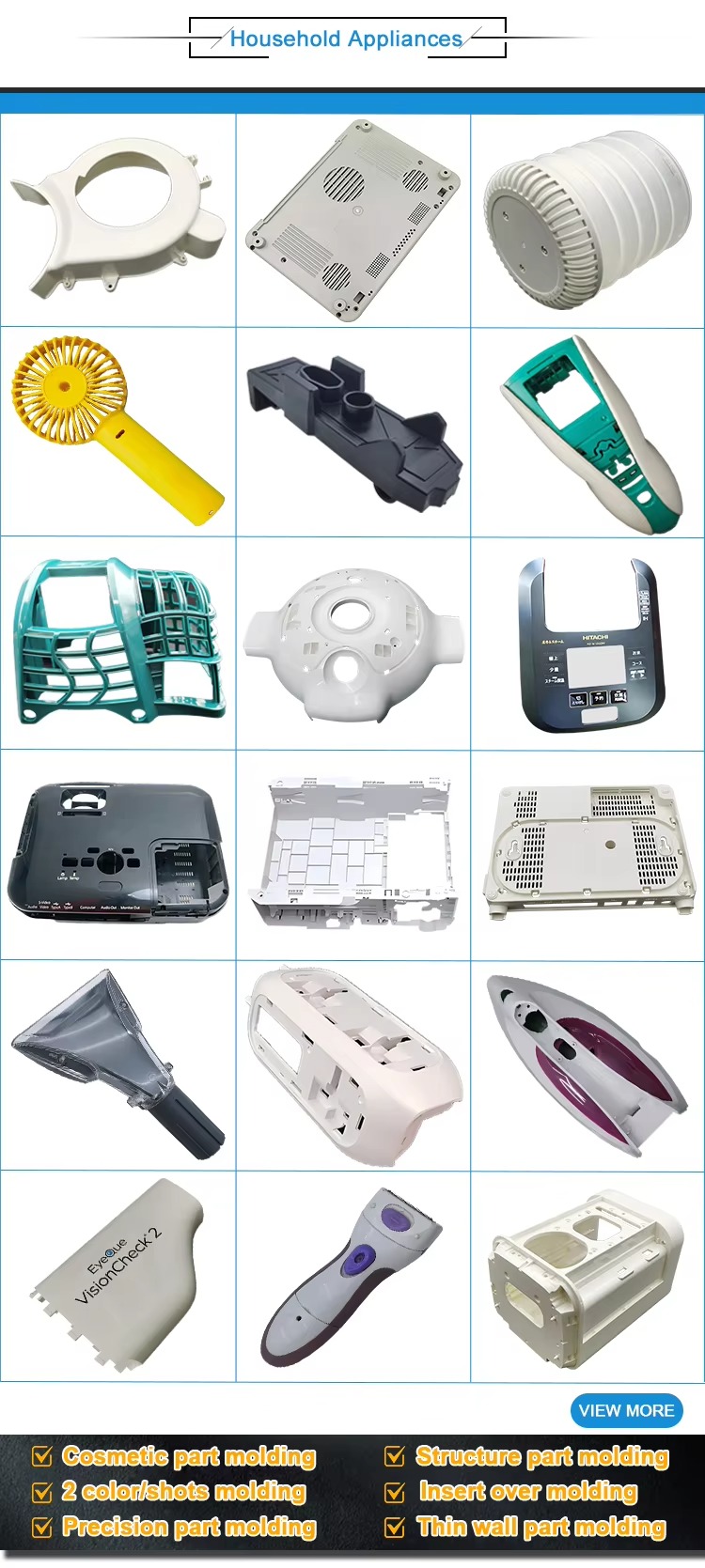
Injection molding Plastic Parts are core components of household products, characterized by low cost, high precision, design flexibility, and excellent durability, which perfectly match the mass production and functional requirements of home appliances, kitchenware, cleaning tools, and daily necessities. Below is a comprehensive guide covering material selection, typical applications, manufacturing key points, and quality control.
Kitchen & Dining Products
- Food containers: PP injection-molded boxes with snap-fit lids, designed with uniform wall thickness (1.2–2.0 mm) to prevent warpage during heating.
- Small kitchen appliances: Blender jars (transparent PC), rice cooker inner lids (PP), and juicer housings (ABS/PC alloy) with integrated snap structures to reduce assembly steps.
- Tableware: Plastic bowls, plates, and spoons (food-grade PP/PS), with smooth surfaces and rounded edges for safety.
Home Appliances
- Large appliances: Refrigerator door handles (ABS), washing machine drum baffles (PP), air conditioner control panel frames (PC/ABS alloy) with flame-retardant properties.
- Small appliances: Hair dryer housings (PBT), electric kettle bases (heat-resistant PP), vacuum cleaner filters (PP mesh) with precise hole designs.
Cleaning & Daily Necessities
- Cleaning tools: Mop heads (PP with anti-slip textures), detergent bottle caps (HDPE with threaded structures), trash can bodies (HDPE with reinforced ribs for load-bearing).
- Bathroom products: Soap dishes (ABS), shower caddies (PP with corrosion resistance), toilet seat hinges (PA66+GF for wear resistance).
Storage & Organization Products
- Plastic storage boxes (PP/HDPE) with stackable designs, drawer slides (ABS with low friction), and wardrobe organizers (PS with transparent properties for visibility).

Core Advantages
- Cost efficiency: Low per-unit cost for mass production (suitable for 10k+ pieces), with material waste <5%—far lower than subtractive manufacturing processes.
- Design flexibility: Can produce complex shapes (e.g., integrated snap fits, hollow structures) that are difficult to achieve with other processes, reducing assembly steps and costs.
- Consistency: Automated production ensures uniform quality of batch parts, meeting the standardized requirements of household product brands.
- Safety & compliance: Easy to use food-grade, flame-retardant, and environmentally friendly materials that comply with global standards (FDA, RoHS, UL).