1. Use cooling lubricants appropriately, utilizing their three main functions: cooling, cleaning, and lubrication. Maintain the cleanliness of the cooling lubricant to control grinding heat within acceptable limits and prevent workpiece thermal deformation. Improve cooling conditions during grinding, such as using oil-immersed grinding wheels or internal cooling grinding wheels. Introducing the cutting fluid to the center of the grinding wheel allows the cutting fluid to directly enter the grinding zone, providing effective cooling and preventing workpiece surface burns.
2. Minimize quenching stress after heat treatment, as quenching stress and network carbide structures, under the action of grinding forces, can easily cause phase transformations in the material, leading to workpiece cracking. For high-precision molds, to eliminate residual grinding stress, low-temperature aging treatment should be performed after grinding to improve toughness.
3. To eliminate grinding stress, the mold can also be immersed in a salt bath at 260-315°C for 1.5 minutes, and then cooled in 30°C oil. This can reduce hardness by 1 HRC and reduce residual stress by 40%-65%.
4. For precision molds with dimensional tolerances within 0.01mm, the influence of ambient temperature on precision grinding must be considered, requiring constant temperature grinding. Calculations show that for a 300mm long steel part, a temperature difference of 3°C results in a material change of approximately 10.8 μm (10.8 = 1.2 × 3 × 3, with a deformation of 1.2 μm/°C per 100mm). This factor must be fully considered in all precision machining processes.
5. Use electrolytic grinding to improve mold manufacturing accuracy and surface quality. During electrolytic grinding, the grinding wheel removes the oxide film, rather than grinding the metal itself. Therefore, the grinding force and heat are low, preventing grinding burrs, cracks, and burns. The surface roughness can generally be better than Ra0.16μm; in addition, the wear of the grinding wheel is small. For example, when grinding cemented carbide, the wear of a silicon carbide grinding wheel is approximately 400% to 600% of the weight of the removed cemented carbide. With electrolytic grinding, the wear of the grinding wheel is only 50% to 100% of the amount of cemented carbide removed.
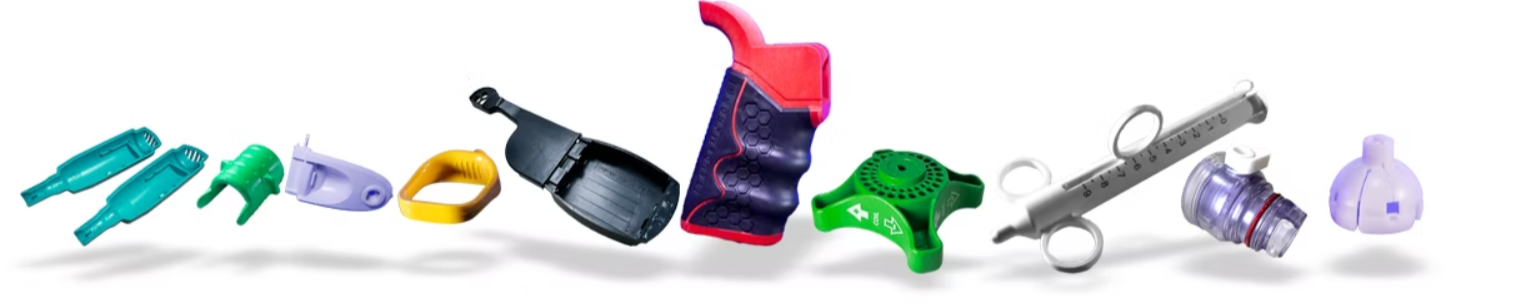
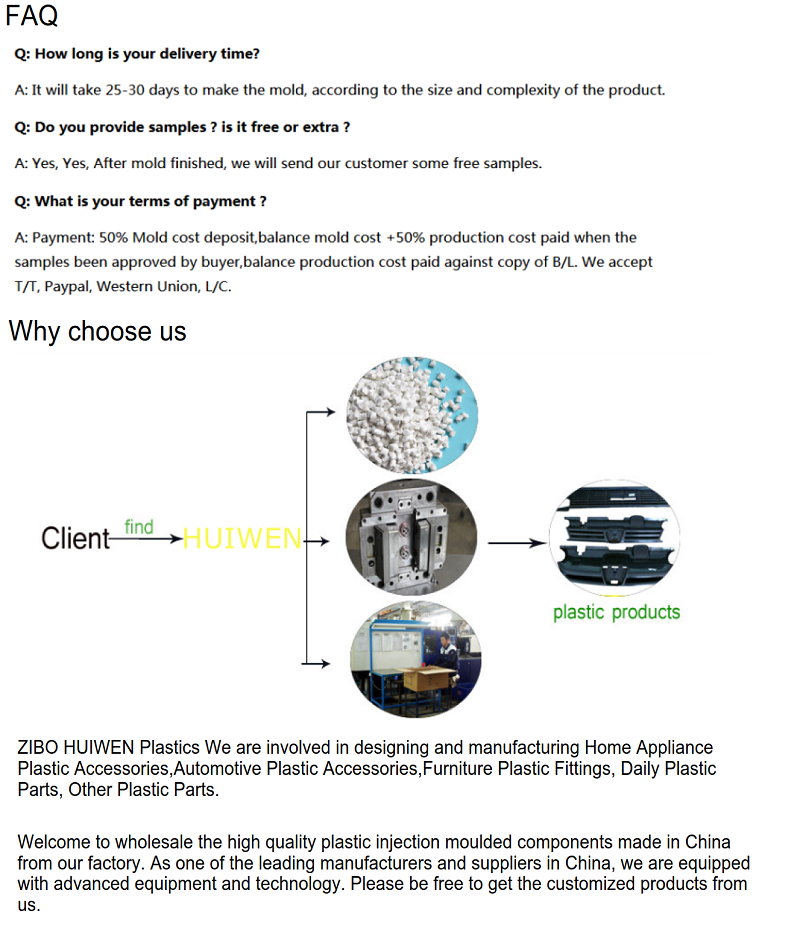
Unleash the potential of plastics with HUIWEN's precision injection molding technology.
We transform plastic raw material granules into high-quality, complex parts through streamlined plastic injection molding processes.
Using cutting-edge technology, we provide durable and stable parts for a variety of applications, turning your plastic ideas into reality.
We don't just produce injection molded parts; we craft excellence. We are committed to using cutting-edge technology, high-quality materials, and meticulous processes to ensure the best results for your project.
Need complex geometries?
Stronger and tougher? Using new materials?
HUIWEN knows how to translate your needs into deliverable results.
Exceptional injection molded parts come from smarter thinking.
2. Fillers, also called fillers, can improve the strength and heat resistance of plastics and reduce costs. For example, adding wood flour to phenolic resin can greatly reduce costs, making phenolic plastic one of the inexpensive plastics, while also significantly improving mechanical strength. Fillers can be divided into two categories: organic fillers and inorganic fillers. The former includes wood flour, shredded cloth, paper, and various textile fibers, while