Durable Plastic Parts Designed for Household Applications
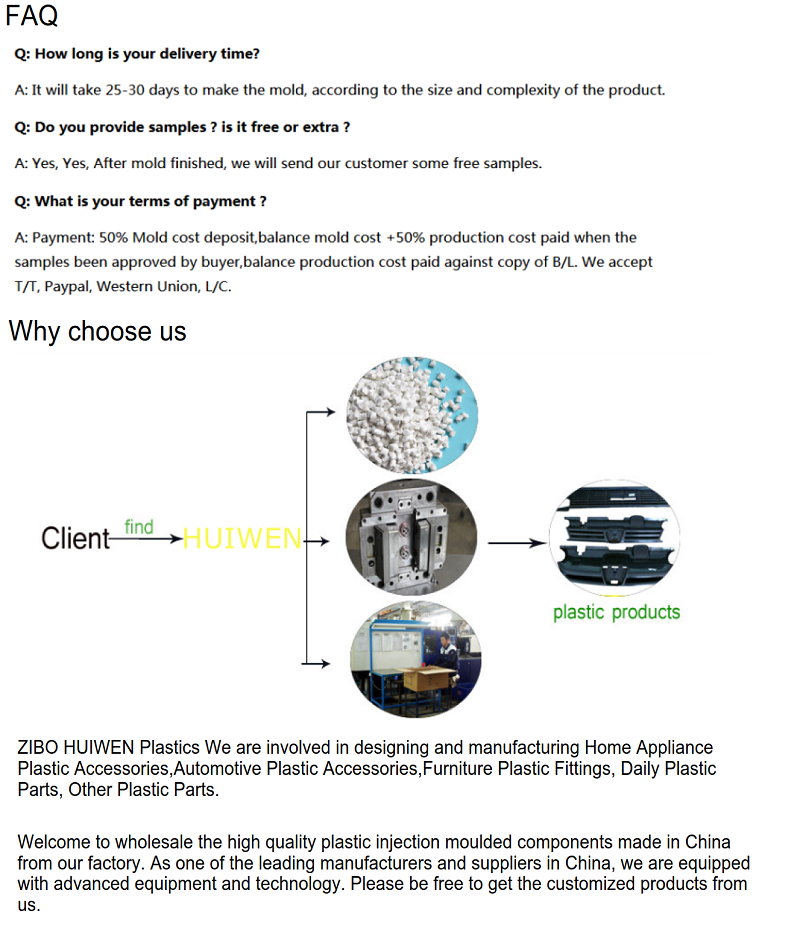
ZIBO HUIWEN can custom produce the Injection molding Plastic Parts .
Durable plastic parts for household applications are engineered to balance mechanical robustness, chemical resistance, cost-effectiveness, and user safety, while meeting the functional demands of daily use scenarios (e.g., frequent impact, exposure to water/cleaning agents, temperature fluctuations). Below is a structured breakdown of their core design principles, material selection, typical components, and manufacturing considerations for injection molding.
Key Advantages
- Uniform Wall Thickness: Maintain 1.5–4 mm thickness (optimal for most household plastics) to avoid sink marks, warpage, and stress concentration. Sudden thickness changes should be limited to ≤20% to ensure even cooling during molding.
- Reinforcement Structures: Integrate ribs (height ≤ 3× wall thickness, spacing ≥ 2× rib thickness) and bosses (add fillets at the base with R ≥ 0.5 mm) to enhance rigidity without increasing overall weight. This is critical for parts like laundry detergent bottle caps and vacuum cleaner housings.
- Impact Resistance Optimization: Use rounded corners (R ≥ 1 mm) instead of sharp edges to disperse impact force; avoid thin, protruding structures that are prone to breakage (e.g., handles of storage bins).
- Chemical & Environmental Resistance Design: For parts in contact with detergents, oils, or food, ensure smooth surfaces to prevent residue accumulation; avoid crevices that are difficult to clean (compliant with FDA food contact standards if applicable).
- Tolerance Matching: Design assembly clearances (0.1–0.3 mm) for parts requiring frequent disassembly (e.g., blender lids, trash can liners) to prevent wear and deformation after repeated use.
Application Industries
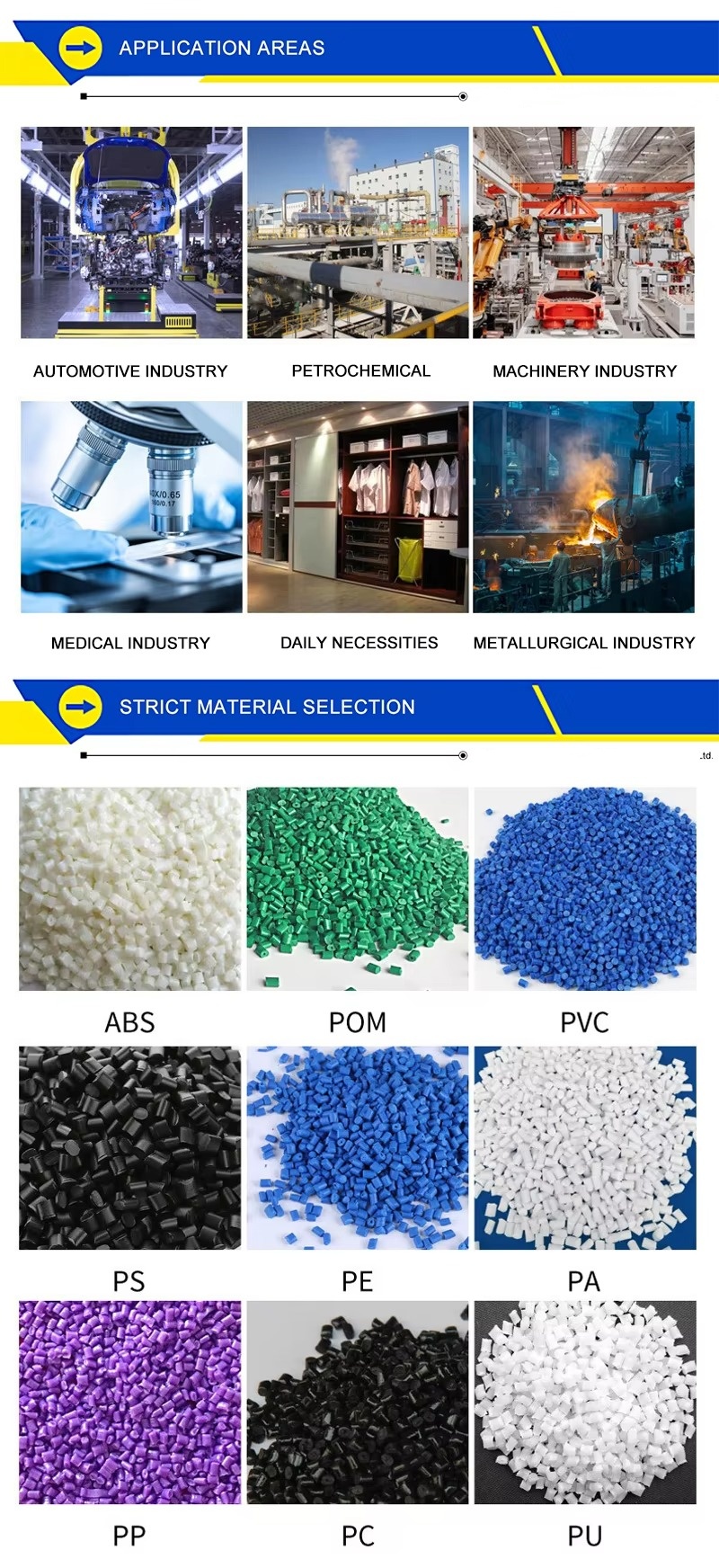
- Electronics & Electrical: Mobile phone shells, charger housings, LED lamp holders, switch panels.
- Automotive: Interior trim parts, exterior components, engine bay parts, sensor housings.
- Medical Devices: Syringe components, diagnostic equipment housings, surgical instrument parts.
- Consumer Goods: Household appliance shells, toy parts, packaging containers.
- Industrial Equipment: Gear parts, valve bodies, instrument enclosures.